
Research Area: Digital & Technology

  • Council Report No.173 – Artificial Intelligence in Service of Society: Navigating Our Way Forward

    Council Report No.173 – Artificial Intelligence in Service of Society: Navigating Our Way Forward

    Shaping AI: What should it do and for whom?

    28 April 2026, Dublin, Ireland: A new NESC report Artificial Intelligence in Service of Society: Navigating Our Way Forward emphasises that Ireland is currently in a critical window of opportunity. As AI becomes increasingly embedded across public services, workplaces and everyday life, now is the time to put the right foundations in place: strengthening skills, governance, infrastructure and public trust so that Ireland can realise the benefits of AI while minimising foreseeable risks and unintended consequences.

    The report outlines that the goal should be to proactively shape AI, so that its benefits can be realised responsibly, equitably, and sustainably. Taking a broad socio-technical perspective, the report argues that AI is not merely a technological tool, but a transformation shaped by governance, institutional capacity and societal choices. According to Dr Siobhán O’Sullivan, Senior Policy Analyst at NESC:

    “There is a tendency to treat AI as a purely technical phenomenon—something to be evaluated on the basis of whether it works as designed. But that framing misses the most important questions. AI systems do not operate in a vacuum; they are embedded in organisations, workplaces, public services and communities, and their impacts emerge from that interaction. A socio-technical lens asks not only whether a system functions as intended, but who benefits, under what conditions, and at what cost. That shift in perspective is what moves us from asking what AI can do, to asking what it should do—and for whom.”

    The report sets out five interconnected priorities:

    • Responsible and Strategic Adoption: AI should address clearly defined public and organisational needs and align with workforce skills, data quality and institutional capacity.
    • Trustworthy and Ethical Practice: Systems must be transparent, accountable and subject to meaningful human oversight, translating ethical principles into real-world actions.
    • Anticipatory Governance: With AI evolving rapidly, regulation must be forward-looking, adaptive and based on continuous monitoring rather than reactive fixes.
    • AI Literacy as National Infrastructure: Building widespread understanding of AI is essential for workforce adaptation, democratic oversight and responsible use.
    • Public Legitimacy: Long-term success depends on securing public trust through inclusive engagement and sustained societal dialogue.

    A central theme of the report is the requirement for AI systems to be safe, ethical and trustworthy in practice, not only in principle. AI systems are probabilistic and imperfect. Meaningful human control is essential to prevent over-reliance, loss of judgement and accountability gaps. High-level ethical principles must be translated into concrete practices with individuals and institutions building genuine ethical capability to ensure AI operates safely, fairly and effectively.

    Among the report’s most significant findings is its designation of AI literacy as essential national infrastructure. Ireland has a growing ecosystem of AI literacy initiatives, but these remain fragmented, and significant gaps persist in public understanding. NESC calls for development of AI-literate citizens capable of questioning and scrutinising AI systems, and AI-literate senior leaders capable of providing effective organisational oversight—both of which are identified as preconditions for democratic accountability.

    On governance, the report notes that the trajectory of AI capability remains genuinely uncertain, and that regulatory approaches must be agile, anticipatory and continuously updated. In line with the National Digital and AI Strategy, NESC argues that continuous monitoring is central—particularly given evidence gaps and the tendency for AI systems to behave differently in complex real-world environments than in controlled settings. Anticipatory governance enables policymakers to detect emerging risks early and respond proactively rather than reactively.

    Dr Larry O’Connell, Director of NESC, noted that:

    “The trajectory of AI capability is genuinely uncertain. We cannot predict with confidence what the technology will look like in five or ten years, which means governance designed only for today’s systems may be inadequate for tomorrows. Anticipatory governance gives us the tools to prepare for multiple possible futures — through strategic foresight, continuous monitoring and flexible regulatory approaches that can detect emerging risks early and respond proportionately. The goal is not to predict the future but to build the institutional resilience to navigate it, whatever form it takes.”

    To read the report in full please click here.

    ENDS

    For further information, contact:

    Marie Lynch, Carr Communications,

    e: marie@carrcommunications.ie | m: 087 973 0522

  • Artificial Intelligence in Service of Society: Navigating Our Way Forward

    Artificial Intelligence in Service of Society: Navigating Our Way Forward

    Since the arrival of ChatGPT in late 2022, artificial intelligence (AI), a field with decades of development in specialist settings, has entered mainstream public and policy discourse. However, its ultimate trajectory remains highly uncertain, particularly regarding when, where, and for whom it will deliver the greatest value, and at what social and environmental cost.

    The purpose of this report is to offer a series of reflections on how Ireland can best secure its ambition to develop and deploy AI in ways that are safe, ethical and rights-respecting. It considers how Ireland can harness AI to support economic prosperity and serve the public good, align with emerging European and international norms, and build public trust in technologies that are already reshaping work, education, and everyday life. The report takes a broad, high level view of the field rather than offering a deep dive into any single issue, providing a holistic foundation from which to consider Ireland’s overall direction in AI.

  • NESC Visits Strasbourg for Conference on Our “Algorithmic Age”

    NESC Visits Strasbourg for Conference on Our “Algorithmic Age”

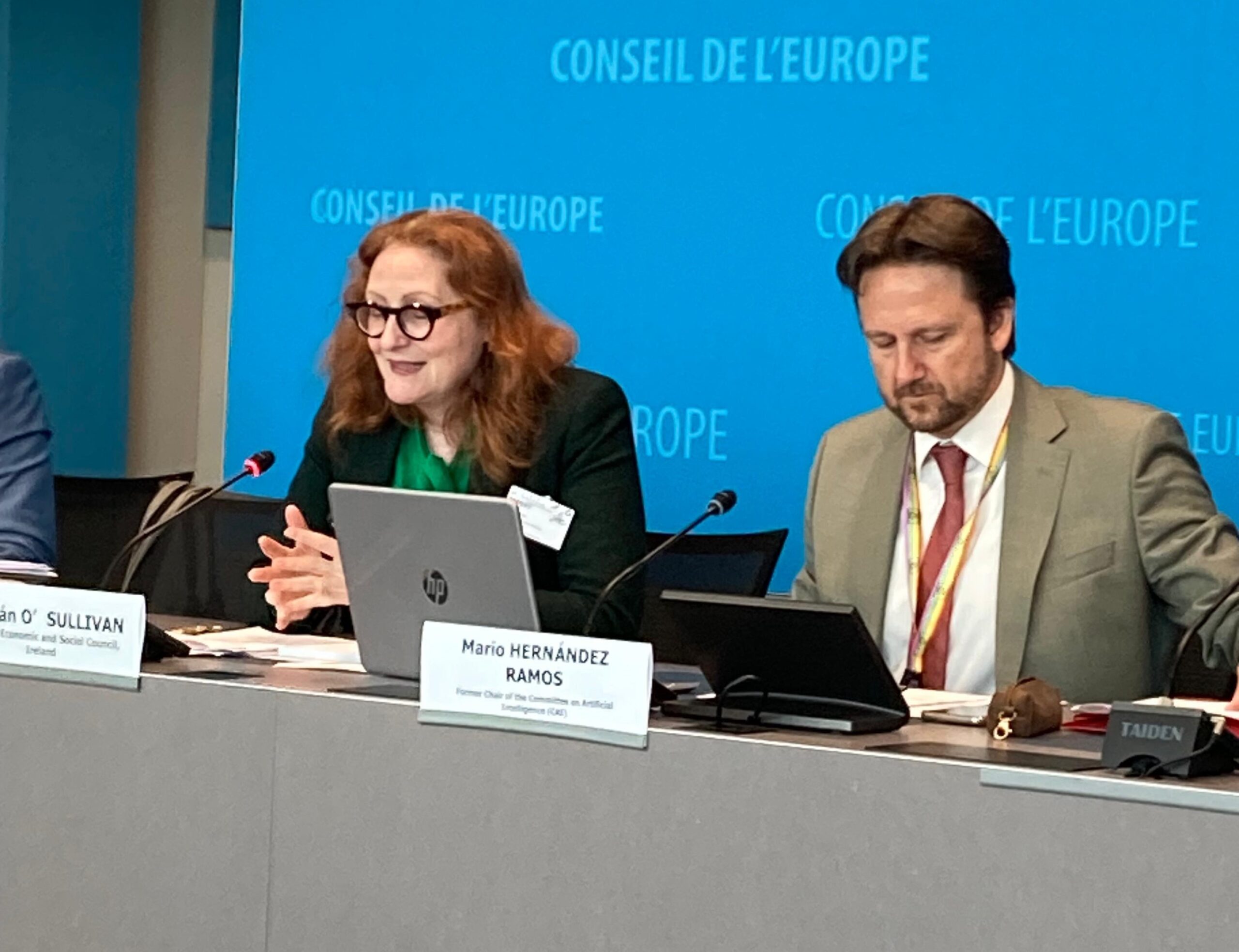
    On Wednesday, 15 April the Council of Europe held a Conference in Strasbourg on the “Algorithmic Age” seeking to explore how new and emerging digital technologies operate in real social, institutional, and legal contexts, and what this means for human rights, democracy, and the rule of law. Dr Siobhán O’Sullivan, senior policy advisor with NESC, was an invited speaker and discussed the implications of digital technologies, and AI in particular, for human dignity, autonomy, and privacy.

    Siobhán told the conference that digital technologies have the potential to expand the reach of human rights in terms of access to justice, freedom of expression, education, and participation in public life. Equally, she pointed out, these very rights can be eroded by emerging digital technologies if platforms, algorithms, or surveillance infrastructures operate outside accountability frameworks.

    Siobhán also touched on how digital technologies do not, in themselves, raise categorically new ethical questions. The challenge is to build governance architectures capable of giving existing rights, such as dignity, autonomy, equity, and privacy, practical effect under conditions of rapid change, systemic opacity, and jurisdictional complexity. How digital technologies develop, who benefits, what harms arise, and how effectively they are managed will depend not only on the technology but on the governance, institutional capacity, and societal choices brought to bear on it, she argued.

    Siobhán summed up by saying that a coherent and agile governance framework, one that specifically places human rights at its centre, should not be seen as a constraint on technological development but rather the foundation for it. It can provide the stable regulatory environment that investment requires, while also addressing public trust, which is a fundamental precondition for technological progress.

    Find out more about NESC’s work on AI and digital technologies here.

  • NESC Participates in EESC-CNEL Conference on Artificial Intelligence (AI) and Industrial Relations

    NESC Participates in EESC-CNEL Conference on Artificial Intelligence (AI) and Industrial Relations

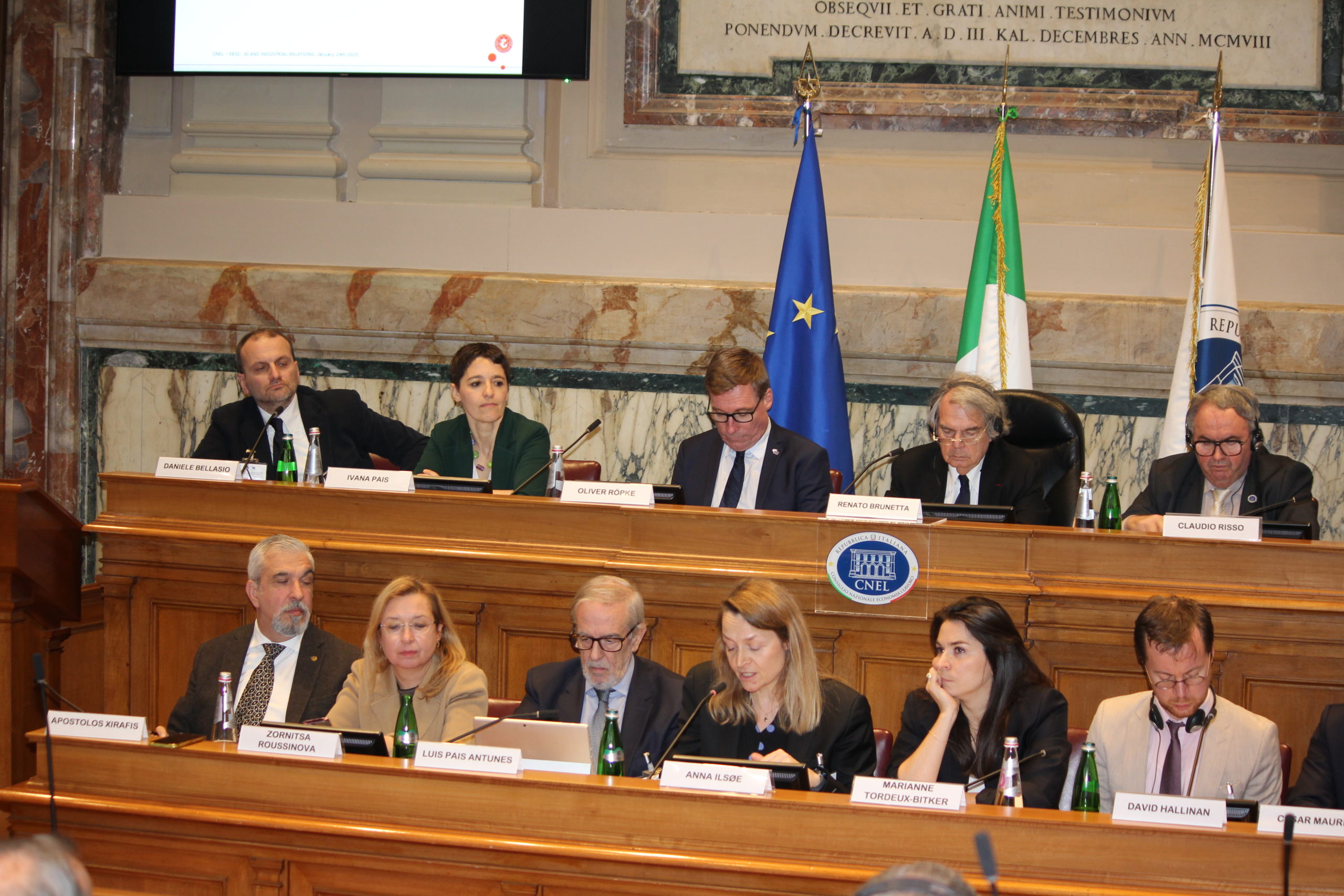
    David Hallinan, bottom right, at the EESC-CNEL Conference on AI.


    On 24th January 2025 NESC Policy Analyst Dr David Hallinan took part in a conference organised by the European Economic and Social Committee (EESC) and the Italian National Council for Economics and Labour (Consiglio Nazionale dell’Economia e del Lavoro – CNEL) on “Artificial Intelligence and Industrial Relations”.

    The conference heard contributions from academic experts, EESC representatives, and equivalent bodies to NESC operating in several European countries including Italy, Spain, Portugal, Bulgaria and Greece. A central theme of the conference was the role of social partners in the adoption, regulation and development of AI. CNEL President Renato Brunetta announced the creation of a database which will collect the main applications of AI impacting companies and work; particular attention will be paid to those affecting labour relations between companies and unions.

    David presented the findings of recent NESC research on the implications of AI for job quality, as well as other Irish research on the labour market impacts of AI. His presentation also described the Irish government’s strategy to promote responsible use of AI, as well as NESC’s view that social dialogue is essential to maximise the benefits and mitigate the risks associated with it. David also outlined how future NESC research will examine issues such as the labour market impacts of Generative AI (GenAI), AI adoption in the context of public services, and public engagement and transparency in AI governance.

  • A Review of International Policies and Programmes to Support Digital Inclusion

    A Review of International Policies and Programmes to Support Digital Inclusion

    This background paper provides additional examples of international programmes that support digital inclusion for individuals.  It complements the international policies and programmes to support digital inclusion which were outlined in the main Council report No.154, Digital Inclusion in Ireland: Connectivity, Devices & Skills.

  • Digital Inclusion in Ireland: Connectivity, Devices & Skills

    Digital Inclusion in Ireland: Connectivity, Devices & Skills

    Covid-19 lockdowns have seen so much of how we live, work and play move online. There has been a dramatic shift to digital and this is likely to grow in importance in the years to come. However, this NESC report, Digital Inclusion in Ireland: Connectivity, Devices & Skills shows that that there are groups who remain poorly engaged with digital technologies. In particular, it highlights those who are older, have lower levels of education, lower incomes, and live in rural areas; as well as smaller businesses and farms.

    The report argues that a digital inclusion strategy would help address the ‘digital’ needs of people in these key groups. Doing so would build on Ireland’s large investment in broadband connectivity. It would also help companies, particularly micro-businesses, compete effectively with other small open economies. And critically in the years to come it could be a key means of combatting social exclusion.

    The report highlights that there are several State policies focused on digital technologies. There are also a range of state agency, business and community programmes. There is a need to co-ordinate across these policies and programmes if digital inclusion is to improve. The report recommends a stand-alone digital inclusion strategy should be developed. It also recommends a comprehensive framework for digital skills progression and certification. It highlights the need for targeted supports for key groups, including those with low incomes, and smaller businesses and farms. Finally, it argues that enhanced guidance is needed to develop digital public services which are easily accessed by all, and assisted-digital public services for the groups who will continue to face difficulties going online.


    Follow us @Nescireland

                                                                                    #Digital #inclusion

  • The Transition to a Low-Carbon and More Digital Future: Supporting the Needs of Vulnerable Workers and Enterprises

    The Transition to a Low-Carbon and More Digital Future: Supporting the Needs of Vulnerable Workers and Enterprises

    The Irish Government asked the National Economic and Social Council (NESC) to examine the specific issue of the vulnerability for workers, firms and sectors caused by the transition to a low-carbon and more digital, automated future, and to provide recommendations. The Council has done so and sets out its findings and suggestions in its Report No.149 Addressing Employment Vulnerability as Part of a Just Transition in Ireland. In that report, the Council inter alia sets out the drivers of the Government’s response to the employment vulnerability created by transitions. This is in the context of a broader vision and a commitment to a high-quality jobs economy. The three key drivers are:

    • continuous, pre-emptive workforce development;
    • building resilient enterprises; and
    • delivering high-impact targeted funding to support transition.

    The Council believes that lifelong learning, training and education, effective support for viable but vulnerable companies, and ensuring that funding has the greatest possible local impact must be the priority for government as part of making sure the transition to a low-carbon and digital Ireland is just.


    Social Media

    Report Tweets #NescTransition

    Follow us @nescireland