Research Area: Economic & Enterprise Policy

  • NESC Hosts Bioeconomy Workshop at Tom Johnson House

    NESC Hosts Bioeconomy Workshop at Tom Johnson House

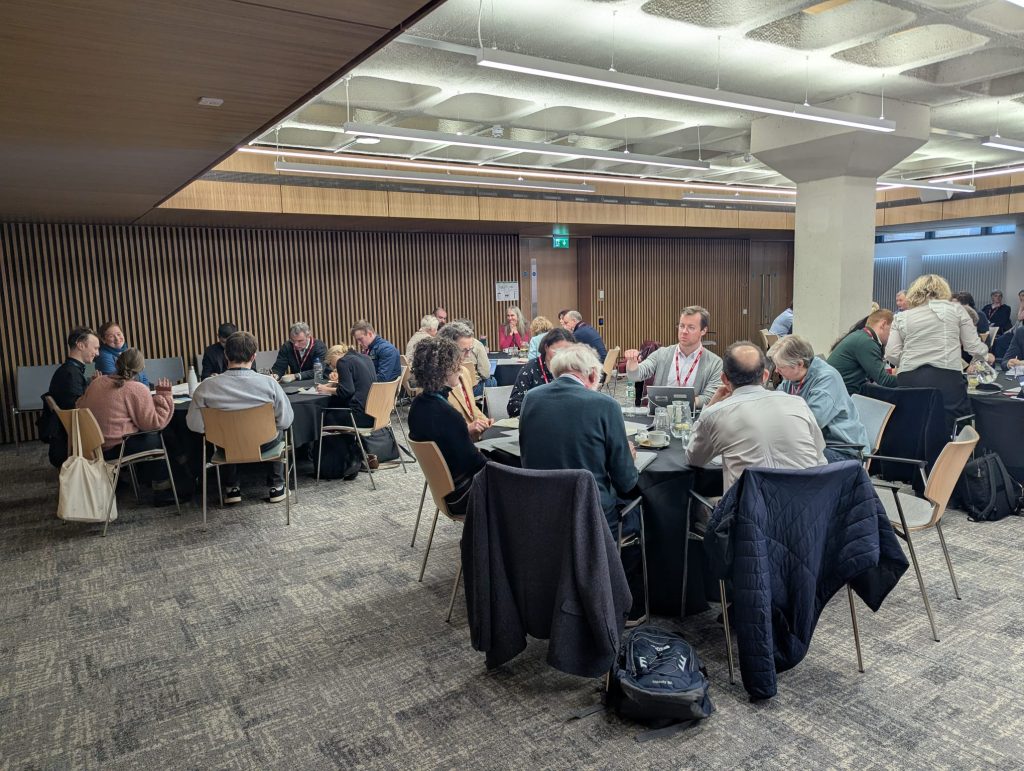
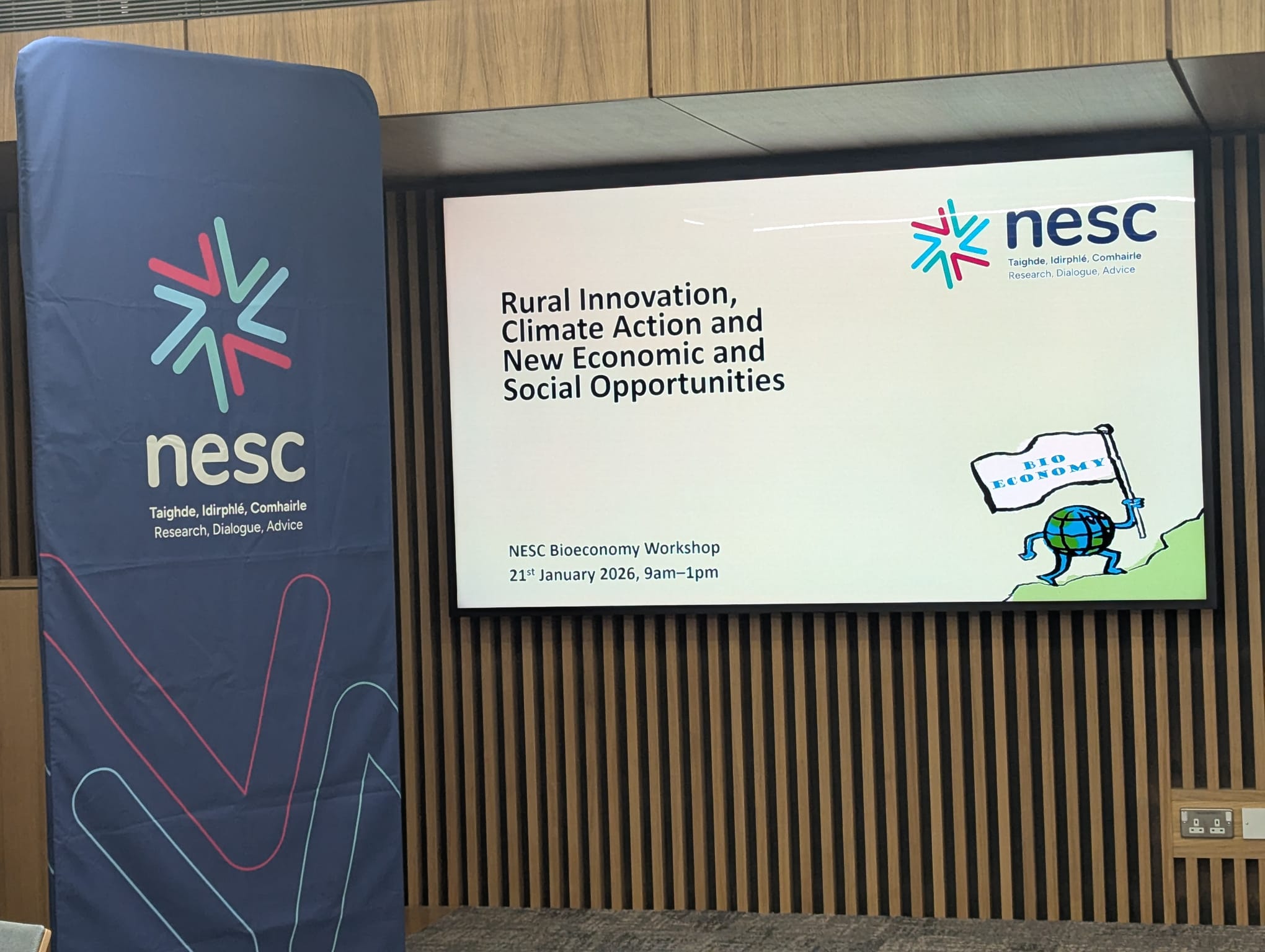
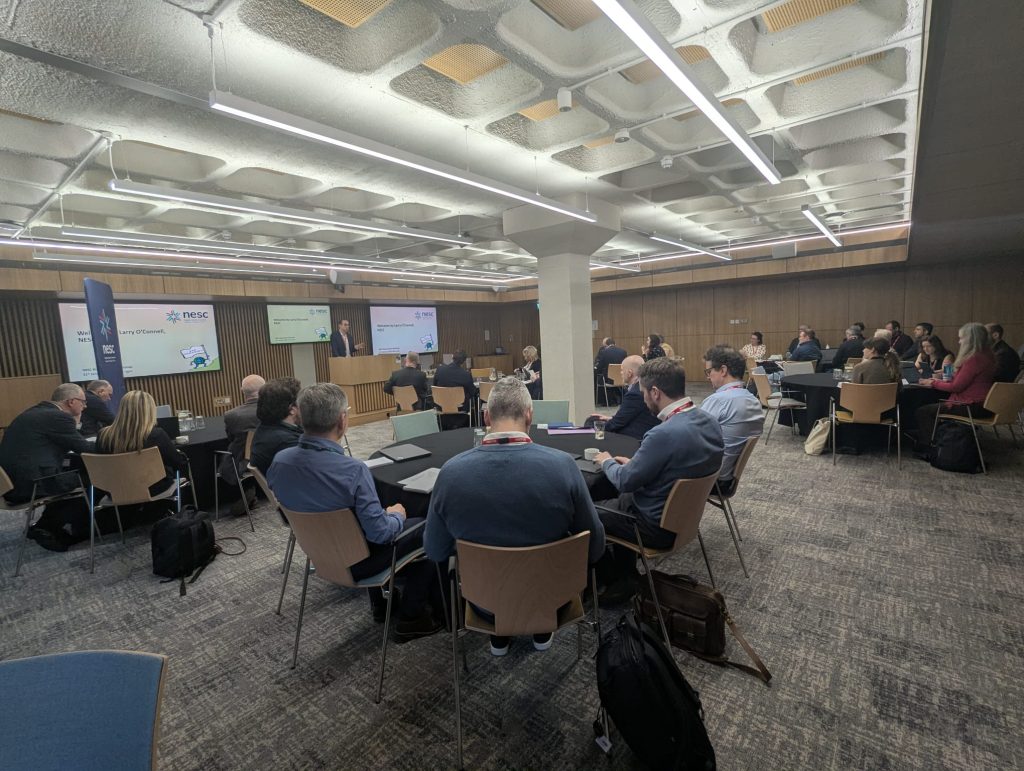
    On Wednesday, 21st January NESC hosted a workshop on ‘Rural Innovation, Climate Action and New Economic and Social Opportunities: How to realise the potential of the bioeconomy in Ireland’.

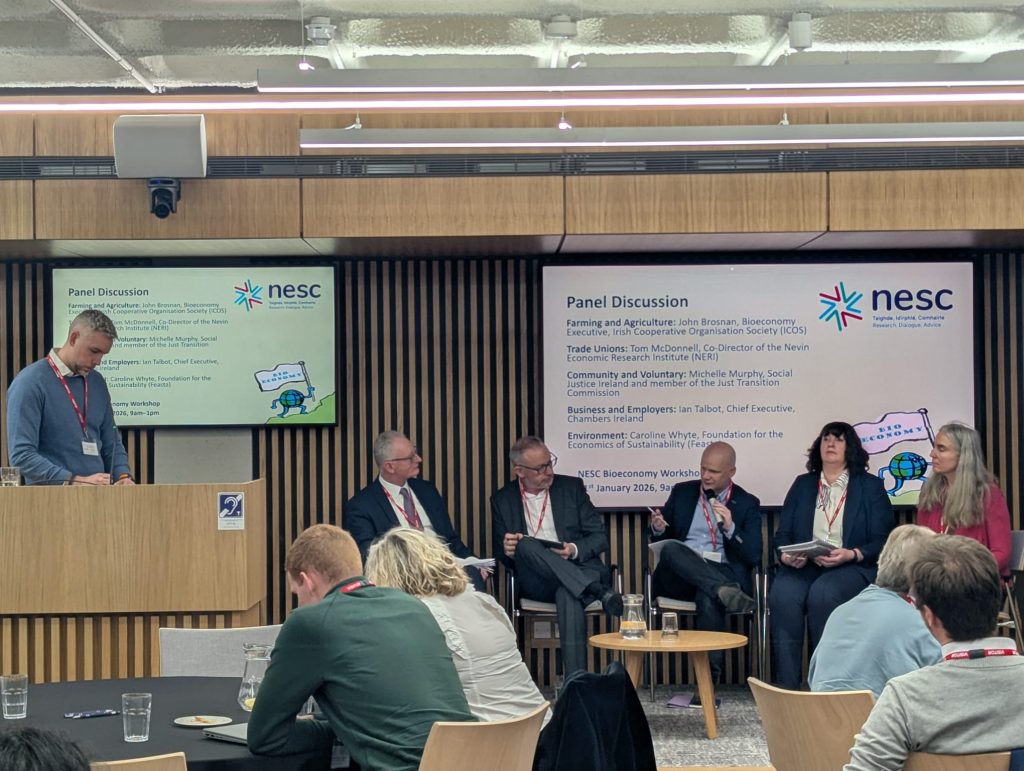
    The workshop included presentations on the current policy, research, and implementation of bioeconomy projects by Karl Walsh (Department of Agriculture, Forestry and the Marine), John Brosnan (Irish Cooperative Organisation Society) and Sean Douglas (BiOrbic). A panel representing the different NESC members discussed how to realise the potential of the bioeconomy, which included remarks from: John Brosnan (ICOS), Tom McDonnell (the Nevin Economic Research Institute), Michelle Murphy (Social Justice Ireland and member of the Just Transition Commission), Ian Talbot (Chambers Ireland), and Caroline Whyte (the Foundation for the Economics of Sustainability).

    Ireland’s draft bioeconomy strategy and action plan was presented by Laura Broomfield (Department of Climate, Energy and the Environment), which was followed by a facilitated discussion among participants with an aim to providing feedback on the plan. Participants highlighted that the development of the bioeconomy represents significant opportunities across multiple objectives, and that Ireland has the potential to be a leader in this area by building on these strengths and taking action to address uncertainties.
  • NESC and British-Irish Chamber of Commerce Discuss Energy Transition

    NESC and British-Irish Chamber of Commerce Discuss Energy Transition

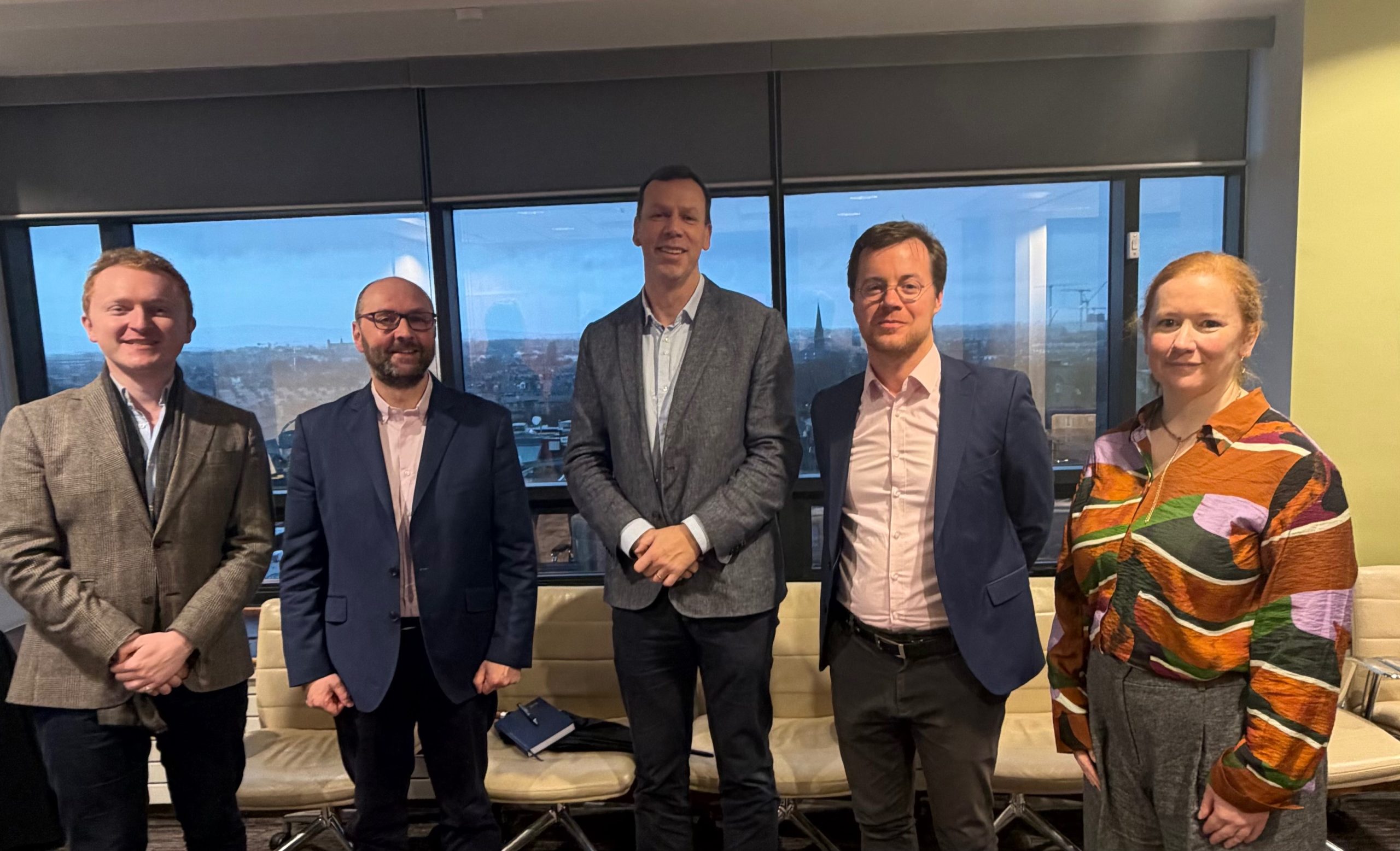
    L-R: Cillian Molloy (Director of Policy, BICC), Cathal FitzGerald (NESC), John Walsh (Vice-Chair, BICC Energy Committee), David Hallinan (NESC), and Gemma O’Reilly (NESC).


    On Monday, 26th January members of the NESC Secretariat met with the British-Irish Chamber of Commerce (BICC) to present an overview of the Council’s Energy Work Programme. The Chamber’s membership includes the main energy companies in Ireland, stakeholders, professional services firms, and others interested and involved in the energy transition in both Ireland and the UK. NESC provided summaries of recent publications on Ireland’s energy transition viewed though a number of different lenses, such as economic resilience, trade dependencies, and connecting households and communities. There was also a discussion of NESC’s ongoing assessment of the transition using a system analysis approach. The NESC presentations were followed by an engaging discussion of the opportunities and challenges in delivering the transition while maximising well-being.

  • Strategic Supply Chain Issues & Ireland’s Energy Transition

    Strategic Supply Chain Issues & Ireland’s Energy Transition

    This paper expands on the findings of the NESC Council Report International Trade Dependencies and the Energy Transition (No.169). It explores strategic supply chain issues that are central to the successful delivery of Ireland’s climate and energy objectives – while Ireland possesses abundant natural resources for renewable energy, particularly in the form of wind, our capacity to develop and deploy these resources at scale is increasingly shaped by global supply chain dynamics, geopolitical developments, and international trade relations. The cost, availability, and sustainability of key technologies and resources such as wind turbines, solar panels, and biofuels are not solely determined by national policies, but by cross-border supply chains, trade policy developments at EU-level, and evolving international regulatory frameworks.

  • A Gravity Model Specification for Irish Green Energy Goods and Services

    A Gravity Model Specification for Irish Green Energy Goods and Services

    As Ireland moves away from fossil fuels and toward more renewable energy sources, there is an opportunity to maximise the economic benefits arising from this transition, including job creation, and exporting goods and services as well as renewable electricity. The purpose of this paper is to explore whether and how a gravity model might help Ireland to seize green export opportunities.

    This research was undertaken during the 2024 NESC internship as part of the Master of Public Policy Programme, University College Dublin. It was published simultaneously with Ireland’s Future Power System and Economic Resilience (NESC Council Report No.167), which you can read by clicking here.

  • NESC at UD2024 in Oslo

    NESC at UD2024 in Oslo

    From 20th–22nd November, NESC Policy Analyst Dr David Hallinan participated in the Universal Design 2024 (UD2024) conference in Oslo. Universal Design (UD) is the design and composition of an environment so that it can be accessed, understood and used to the greatest extent possible by all people, regardless of their age, size, ability or disability. An environment (or any building, product or service in that environment) should be designed to meet the needs of all people who wish to use it. UD2024 is the seventh in a series of biennial international conferences on Universal Design. UD2024 in Oslo had over 300 attendees and was hosted by the Norwegian Directorate for Children, Youth and Family Affairs (Bufdir).

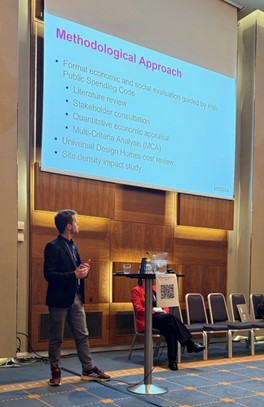
    On the opening day of the conference, David participated in a panel discussion on socio-economic analysis within the field of Universal Design. Other panel members included Lars Lindberg (Nordic Welfare Centre), Jon Roger Andresen (Norwegian Directorate for Children, Youth and Family Affairs) and Ingrid Gaarder Harsheim (Oslo Economics). The discussion was moderated by Kirsti Svinø (Senior Universal Design Adviser, Norwegian Directorate for Children, Youth and Family Affairs). Over the course of the panel discussion the members shared their experience of applying formal economic evaluation methodologies in the fields of disability services and UD. Applying economic evaluation methods such as Cost Benefit Analysis (CBA) and Cost Effectiveness Analysis (CEA) can present distinct challenges and contradictions, as many of the benefits arising from disability policy interventions are non-monetisable and are underpinned by a rights-based approach. The panel members agreed that formal socio-economic evaluation methodologies can be a useful tool to bring about more effective policy implementation, while the use of such methods need not undermine the commitment to a rights-based approach.

    On the second day of the conference David gave a presentation together with Ruth O’Reilly of the Centre for Excellence in Universal Design (CEUD) at the National Disability Authority (NDA). This presentation focussed on an ongoing NDA project on the Costs and Benefits of UD Homes. Ruth provided details on two studies undertaken to inform the UD Homes CBA project – a UD Homes cost assessment study and a site density impact study. David provided details of the methodological approach for the CBA project and an account of some of the key benefits of UD Homes.

    For more on David’s work in the area of UD – including a peer-reviewed paper on the socio-economic benefits of UD Homes jointly authored by himself, Ruth and Dr Gerald Craddock – please visit his Secretariat page here.

  • Towards a National Better Work Strategy

    Towards a National Better Work Strategy

    Better Work is a commitment to improving the quality of work in a way that delivers for all stakeholders. It is a complex concept that incorporates both extrinsic (material) and intrinsic (non-material) attributes. Efforts to improve the quality of work should be informed and shaped by ongoing sectoral dialogue and the harnessing of frontline knowledge. This reflects the Council’s view that any understanding of how to make work better should reflect the different interests and priorities of employees, employers and broader society.

    Better Work has the potential to deepen economic resilience and tackle persistent labour markets challenges. Research demonstrates benefits for employees, employers and wider economy and society.

    Improving the quality of work will not happen by chance, and a balanced and collaborative national strategy is needed to drive this agenda forward. A national strategy serves as a framework to address potential cost competitiveness challenges, while ensuring that actions are appropriately targeted and tailored across different sectors. It can help position Better Work as a central goal of enterprise policy, supporting sustainable improvements in productivity and economic performance.

  • Regional Economic Resilience and Resistance in Ireland 2001-2022: The Roles of Industrial Structure and Foreign Inward Investment

    Regional Economic Resilience and Resistance in Ireland 2001-2022: The Roles of Industrial Structure and Foreign Inward Investment

    This paper examines the resilience and resistance of Irish regions during the course of the post-2007 economic crisis and in the face of potential future shocks after 2022, focusing specifically on employment change of firms in receipt of assistance from the Irish government’s enterprise development agencies. The paper presents two analyses. Firstly, it classifies both regions and sectors in terms of their employment performance in order to assess the roles of sectoral composition and firm nationality in shaping the recession’s regional impact. Secondly, it uses a modified methodology to assess the impact of the same factors on the employment performance of regions during the 2011-2022 period, and to predict the resistance of regions to a potential future shock. While nationality mix is substantial, sectoral composition is found to have a more important impact on regional employment performance. Finally, the paper considers the implications of the findings for trends in regional economic divergence.

  • Understanding the Irish Economy in a Time of Turbulence

    Understanding the Irish Economy in a Time of Turbulence

    Since 2020, Ireland’s economy has experienced a sequence of three significant shocks, in the form of the pandemic, the cost-of-living crisis, and the invasion of Ukraine. Over that time the policy-system has demonstrated flexibility, responsiveness, and effectiveness.

    Government and the policy-making system have attended to immediate pressures which arise on foot of these shocks, and found ways to prioritise and address the needs of the most vulnerable. The Council, in this report, seeks to complement that ongoing work by focusing on both the immediate and beyond, to provide an understanding of the economy in what are, truly, turbulent and unpredictable times.

  • An Opportunity to Review and Reframe Collective Bargaining and the Industrial Relations Regime

    An Opportunity to Review and Reframe Collective Bargaining and the Industrial Relations Regime

    This paper was prepared by the NESC Secretariat to support the deliberations of the LEEF High Level Working Group on Collective Bargaining which was established on the 30th of March 2021. While recognising the complexity of the issues being addressed by the Working Group there is an awareness of the need to put in place an employment relations regime that is “fit for purpose” and capable of meeting the needs of a 21st century economy, labour market and society.  This Paper contends that the work of the High Level Group represents an opportunity to begin to review and reframe collective bargaining and industrial relations as a key policy instrument for supporting a good jobs economy, enhancing productivity and promoting fairness within the labour market.

    The final report of the LEEF High Level Working Group on Collective Bargaining was published on 6th October 2022 and is available here.

  • The Transition to a Low-Carbon and More Digital Future: Supporting the Needs of Vulnerable Workers and Enterprises

    The Transition to a Low-Carbon and More Digital Future: Supporting the Needs of Vulnerable Workers and Enterprises

    The Irish Government asked the National Economic and Social Council (NESC) to examine the specific issue of the vulnerability for workers, firms and sectors caused by the transition to a low-carbon and more digital, automated future, and to provide recommendations. The Council has done so and sets out its findings and suggestions in its Report No.149 Addressing Employment Vulnerability as Part of a Just Transition in Ireland. In that report, the Council inter alia sets out the drivers of the Government’s response to the employment vulnerability created by transitions. This is in the context of a broader vision and a commitment to a high-quality jobs economy. The three key drivers are:

    • continuous, pre-emptive workforce development;
    • building resilient enterprises; and
    • delivering high-impact targeted funding to support transition.

    The Council believes that lifelong learning, training and education, effective support for viable but vulnerable companies, and ensuring that funding has the greatest possible local impact must be the priority for government as part of making sure the transition to a low-carbon and digital Ireland is just.


    Social Media

    Report Tweets #NescTransition

    Follow us @nescireland