Research Area: Health & Societal Wellbeing

  • Covid-19: Five Years On – A Look Back at NESC’s Policy Lessons from the Pandemic

    Covid-19: Five Years On – A Look Back at NESC’s Policy Lessons from the Pandemic

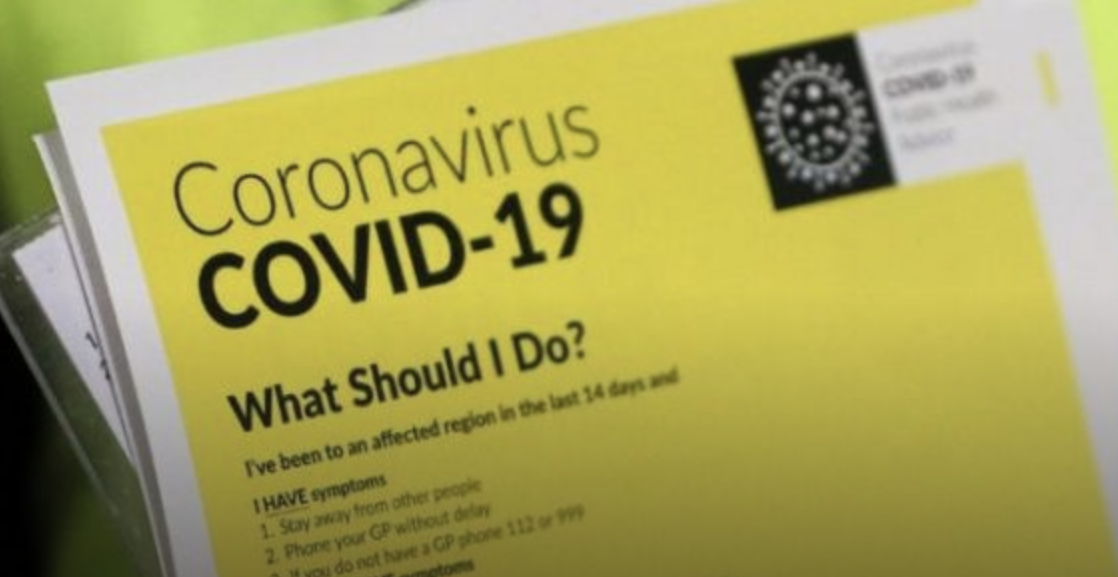
    Today marks the fifth anniversary of the declaration by the World Health Organisation (WHO) that the novel coronavirus (Covid-19) outbreak was a global pandemic – 11th March 2020.

    Two years after that declaration, in 2022, the National Economic and Social Council published its report The Covid-19 Pandemic: Lessons for Irish Public Policy.

    This piece of NESC research reviewed international experience of emergencies and the Covid-19 pandemic, looked at examples of Ireland’s response to the pandemic, and identified five key lessons for Irish public policy – all of which remain relevant today:

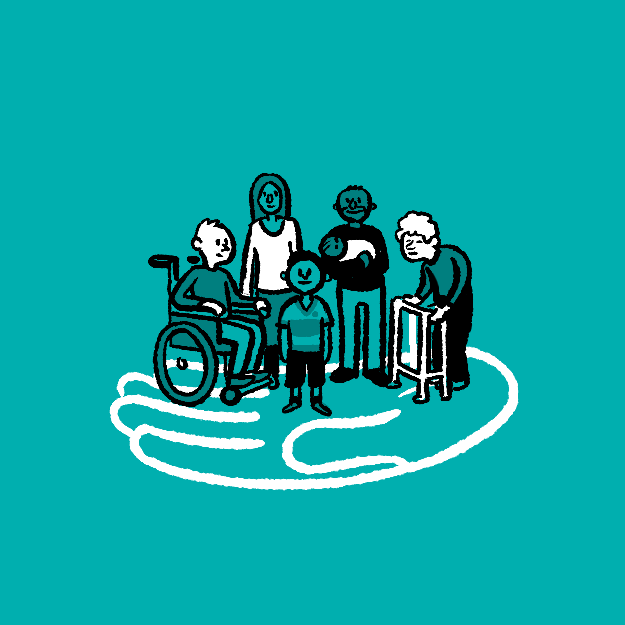
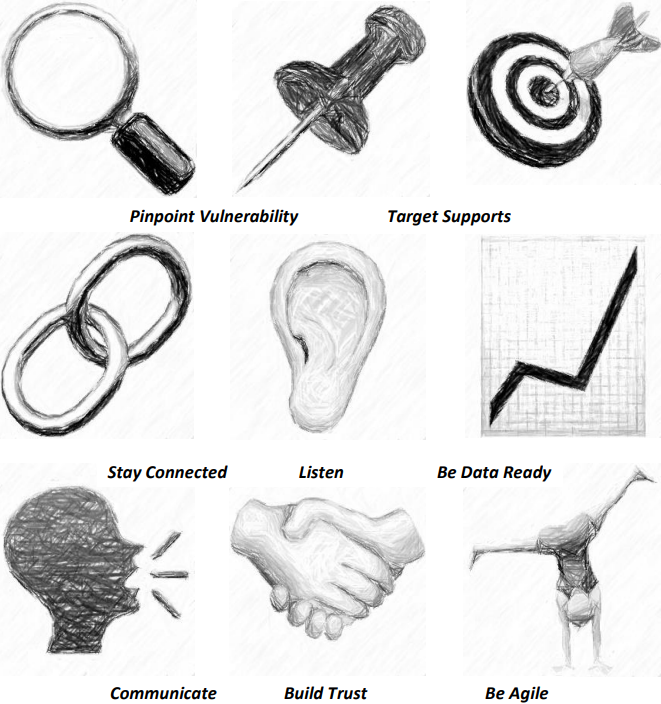
    1. Vulnerability is complex and context-specific, meaning pinpointing and managing vulnerability are crucial;
    2. Stakeholder networks and experts shape outcomes, so the policy system must stay deeply engaged;
    3. Real-time evidence, when used alongside longer-run data, has the power to transform policymaking, suggesting that the analytical activity which aided in the pandemic response can be applied in other areas of public policy;
    4. Adapting the policy world to the data world requires significant effort, meaning that governance, privacy, access, confidentiality, and data-sharing issues must be prioritised and addressed with urgency; and
    5. Communication and trust are critical for responding to crises. Policymakers must improve their capacity to reach out, listen actively, and communicate clearly. They must also work to ensure their decisions deliver, and are seen to deliver, for society.

    “When we published our analysis in 2022, we said that the lessons from the pandemic could help shape Ireland’s response to crises in other areas, such as climate change and biodiversity loss, housing, in response to the terrible events in Ukraine, and in dealing with the cost-of-living crisis,” stated Dr Cathal FitzGerald, Senior Analyst at NESC, who led the research. “Five years on from the pandemic, those lessons hold true today.”

    “Take just one example, the recent Storm Éowyn. Although on a completely different scale of impact, that storm showed again how vital it is to pinpoint vulnerability and built-in resilience in advance, with reference to local knowledge and real-time data, and with greater capacity to respond,” he said. “NESC’s look back at how Ireland responded to Covid-19 produced policy lessons which can improve our preparedness for both known and unforeseen challenging developments, regardless of whether they emerge quickly, like destructive storms, or are ongoing, such as climate change, energy transition, or economic turbulence,” Dr FitzGerald concluded.


    The full NESC report can be found here.
     

    The detailed policy lessons can be found here.

  • Is Ireland Thriving? Answers from International Assessments

    Is Ireland Thriving? Answers from International Assessments

    The theme of NESC’s 50th anniversary NESC@50 programme of research and events is A Thriving Ireland: Inclusive, Protective, and Forward Looking.

    This Secretariat Report examines the extent to which Ireland can be described as a thriving country with reference to nine regularly cited assessments (covering well-being; human development; sustainable development; transition performance; social progress; biodiversity; competitiveness; inclusive wealth; and the doughnut model incorporating ecological and planetary boundaries).

    The approaches examined have limitations, yet their consideration is a necessary starting point in any discussion of a country’s social, economic, and environmental position. This paper reinforces the position that they can only be a starting point.

    Some key findings are:

    1. There is no one ideal measure of a country’s performance.
    2. While Ireland ranks highly on many metrics, and in several ways is a successful and prosperous nation, there are obvious, significant areas for improvement.
    3. It is important to distinguish between current and future performance.
    4. The question of whether a country is thriving must consider distributional issues.
    5. There are huge challenges to be faced for Ireland and the international community in living within planetary boundaries.
    6. Decoupling of economic growth and environmental impact is possible, but there is a lack of evidence to show that decoupling can be achieved at the scale and speed required to live within planetary boundaries.
    7. There is judgement involved in the selection of indicators for any framework and the results are invariably influenced by indicators chosen. The indicators in Ireland’s well-being framework should be kept under ongoing review.
    8. Overall, Ireland today is thriving in many aspects, with some obvious capacity and distributional challenges; but more must be done on environmental sustainability and for the Ireland of tomorrow.
  • Inequality and Well-Being Frameworks

    Inequality and Well-Being Frameworks

    Inequality, although a contested concept, is generally understood to mean the unequal distribution of social, biological and other factors, which results in unequal opportunities and/or outcomes for those negatively affected. It has damaging consequences for individuals, as well as for the wider society and economy.

    A variety of methods and approaches are used by governments and international governmental organisations to address inequality. These include macro-level policies supporting redistribution, legislation and national strategies; institutions to monitor and promote equality, policy proofing and equality budgeting; and positive action and pilot programmes. These approaches range from the ‘hard’ (e.g. legally binding) to the ‘soft’ (e.g. collection of data). Legally binding commitments are usually the strongest, but softer approaches play a role too, in terms of introducing ideas and concepts to promote equality and address inequality. Political will behind their implementation is also key.

    This report examines a new approach that may hold promise for identifying and addressing inequalities: a well-being framework (WBF). Such frameworks have been increasingly developed since 2008 as a way of moving away from a focus on gross domestic product (GDP) in order to measure a country’s outcomes (e.g. economic, social, environmental).

  • Social Enterprise on the Island of Ireland

    Social Enterprise on the Island of Ireland

    This report provides an overview of the state of social enterprise internationally, in Ireland, in Northern Ireland, and on a shared island basis.   

    A social enterprise is an enterprise whose objective is to achieve a social or environmental impact, rather than maximising profit for its owners or stakeholders. It has a market trading relationship but reinvests its profits for a social or environmental purpose. 

    Social enterprise has the potential to provide training and jobs for the long-term unemployed and people with disabilities, provide much-needed services in disadvantaged communities, along with addressing issues such as food poverty and climate change. 

    The report concludes that there is a need for a co-ordinating framework for social enterprise and that there is the opportunity to have a greater ambition especially in relation to developing a stronger enterprise focus.  Areas for growth of social enterprise are suggested as providing employment opportunities for people distant from the labour market, in renewable energy generation, the circular economy and the restoration of biodiversity, and in caring for children, people with disabilities and older people.  Social enterprises can be supported across the island of Ireland, for example, through the Peace Plus programme.

  • Exploring Shared Opportunities in the North West: Findings from Focus Groups

    Exploring Shared Opportunities in the North West: Findings from Focus Groups

    NESC has been undertaking a Shared Island research programme to contribute to building a shared knowledge base and understanding about possible ways in which greater co-operation can emerge across a number of economic, social and environmental areas on the island of Ireland. As part of this work a place-based inquiry was undertaken in the North West to explore in-depth the ways in which co-operation worked, the barriers and the enablers. The focus was on the lived experience of people in the border areas, with the aim of exploring two integrated thematic issues – sustainability and connectivity.

    To gain a more in-depth understanding of the issues and elements of co-operation in the North West four online focus groups were held in September/October 2021, facilitated by Caitríona Mullan, on: Good Jobs; Green Transformation; Poverty and Mental Health; and Mechanisms for Co-operation. Approximately 60 individuals from across a range of civic, public, community/voluntary, and business sector organisations in the North West participated in these focus groups.

  • The Covid-19 Pandemic: Lessons for Irish Public Policy

    The Covid-19 Pandemic: Lessons for Irish Public Policy

    This research from the National Economic and Social Council reviews international experience of emergencies and the Covid-19 pandemic, looks at examples of Ireland’s response to the pandemic, and identifies five key lessons for Irish public policy.  These are:

    1. Vulnerability is complex and context-specific, meaning pinpointing and managing vulnerability are crucial.
    2. Stakeholder networks and experts shape outcomes, so the policy system must stay deeply engaged.
    3. Real-time evidence, when used alongside longer-run data, has the power to transform policymaking, suggesting that the analytical activity which aided in the pandemic response can be applied in other areas of public policy.
    4. Adapting the policy world to the data world requires significant effort, meaning that governance, privacy, access, confidentially and data-sharing issues must be prioritised and addressed with urgency.
    5. Communication and trust are critical for responding to crises. Policymakers must improve their capacity to reach out, to listen actively, and to communicate clearly. They must also work to ensure their decisions deliver, and are seen to deliver, for society.
  • Managing Emergencies and Disasters: A Review of Key Literature

    Managing Emergencies and Disasters: A Review of Key Literature

    This paper provides background to NESC’s Report No 158, The Covid-19 Pandemic: Lessons for Irish Public Policy.  It outlines key literature on responses to, and effective management of, disasters and emergencies.  It also looks at literature describing the experience of managing Covid-19 to date in a variety of countries.

  • Towards Transformative Outcomes

    Towards Transformative Outcomes

    Towards Transformative Outcomes: Examples of how Well-being Frameworks have been Embedded into Policy Making

    This research looks at how national well-being frameworks have been incorporated into budgeting and policy-making processes in New Zealand, Scotland and Wales. It also looks at the approach taken under Ireland’s Better Outcomes: Brighter Futures – The National Policy Framework for Children and Young People, 2014-2020 (BOBF). BOBF is a sectoral policy framework, but has similar elements to those found in national well-being frameworks. Information was gathered through literature reviews and interviews with those working to design, implement and/or monitor the various well-being frameworks.

  • Shared Island: Projects, Progress & Policy, A Shared Island Perspective on Mental Health

    Shared Island: Projects, Progress & Policy, A Shared Island Perspective on Mental Health

    As part of the Shared Island research project this report from the NESC Secretariat looks at current and possible future co-operation around mental health on the island of Ireland, North and South.

    The issue of mental health has become increasingly visible in the public arena over the last two years. The COVID crisis has brought with it a range of different issues that have had the potential to negatively impact on mental health.  As many of the concerns and policies around mental health are shared by the two jurisdictions, it is a good time to look at how increased dialogue and co-operation on some aspects of mental health could bring benefits to the wider island population.

    There are a number of examples of successful and current co-operation in the mental health sector.  Some of it is led by the community and voluntary sector, often supported by European funding.  In the border counties, there is also evidence of substantial informal interaction between services in the two jurisdictions.

    This report finds that there is an appetite for more formal settings for co-operation and that there could be substantial value in building on current initiatives as well as looking at new areas of co-operation.

  • Shared Island: Projects, Progress & Policy, Sharing Knowledge and Lessons in Combatting Poverty

    Shared Island: Projects, Progress & Policy, Sharing Knowledge and Lessons in Combatting Poverty

    As part of the Shared Island research project this report from the NESC Secretariat shares knowledge and lessons in combatting poverty in the island of Ireland.

    The report finds that poverty is a concern for both parts of the island and both jurisdictions have an anti-poverty strategy or is in the process of preparing one, as well as policies and programmes to support disadvantaged groups and areas. A key learning from these programmes and initiatives is the importance of state, community, and voluntary bodies working together to address disadvantage, whilst listening to and drawing on the knowledge and experience of people living in these local areas.

    While cooperation across the island on addressing poverty is limited there are some initiatives that support this. The future challenge is to build on these initiatives by sharing knowledge and lessons to work towards the reduction of poverty on both parts of the island.