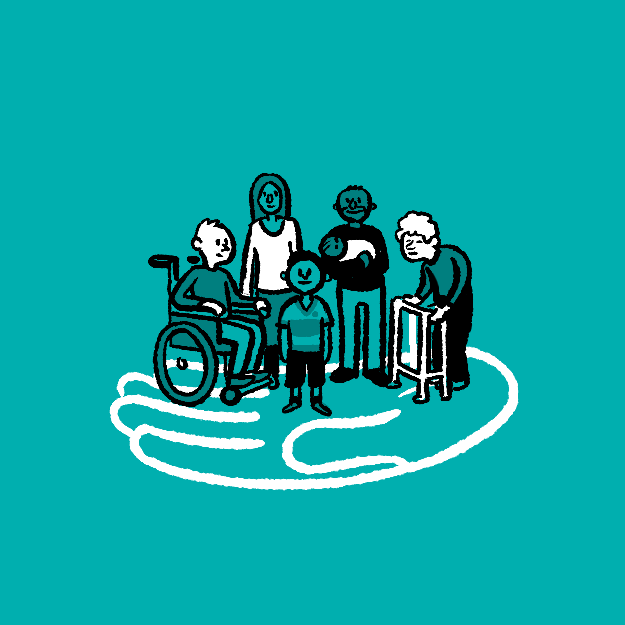
This report compares outputs and themes from two participatory workshops that explored social cohesion using the same process: a Dublin workshop with 38 participants and a Cavan workshop with 24 participants. It focuses on the ideas generated, the emphasis placed on different lenses, and the priorities that emerged through model-building and voting.
Research Area: Social Inclusion Policy
-

NESC at UD2024 in Oslo
From 20th–22nd November, NESC Policy Analyst Dr David Hallinan participated in the Universal Design 2024 (UD2024) conference in Oslo. Universal Design (UD) is the design and composition of an environment so that it can be accessed, understood and used to the greatest extent possible by all people, regardless of their age, size, ability or disability. An environment (or any building, product or service in that environment) should be designed to meet the needs of all people who wish to use it. UD2024 is the seventh in a series of biennial international conferences on Universal Design. UD2024 in Oslo had over 300 attendees and was hosted by the Norwegian Directorate for Children, Youth and Family Affairs (Bufdir).
On the opening day of the conference, David participated in a panel discussion on socio-economic analysis within the field of Universal Design. Other panel members included Lars Lindberg (Nordic Welfare Centre), Jon Roger Andresen (Norwegian Directorate for Children, Youth and Family Affairs) and Ingrid Gaarder Harsheim (Oslo Economics). The discussion was moderated by Kirsti Svinø (Senior Universal Design Adviser, Norwegian Directorate for Children, Youth and Family Affairs). Over the course of the panel discussion the members shared their experience of applying formal economic evaluation methodologies in the fields of disability services and UD. Applying economic evaluation methods such as Cost Benefit Analysis (CBA) and Cost Effectiveness Analysis (CEA) can present distinct challenges and contradictions, as many of the benefits arising from disability policy interventions are non-monetisable and are underpinned by a rights-based approach. The panel members agreed that formal socio-economic evaluation methodologies can be a useful tool to bring about more effective policy implementation, while the use of such methods need not undermine the commitment to a rights-based approach.
On the second day of the conference David gave a presentation together with Ruth O’Reilly of the Centre for Excellence in Universal Design (CEUD) at the National Disability Authority (NDA). This presentation focussed on an ongoing NDA project on the Costs and Benefits of UD Homes. Ruth provided details on two studies undertaken to inform the UD Homes CBA project – a UD Homes cost assessment study and a site density impact study. David provided details of the methodological approach for the CBA project and an account of some of the key benefits of UD Homes.
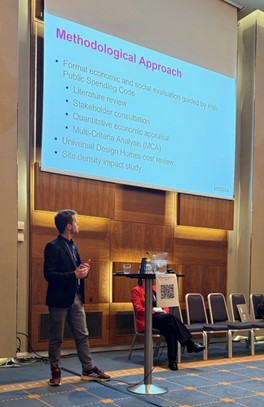
For more on David’s work in the area of UD – including a peer-reviewed paper on the socio-economic benefits of UD Homes jointly authored by himself, Ruth and Dr Gerald Craddock – please visit his Secretariat page here.
-

Social Enterprise on the Island of Ireland
This report provides an overview of the state of social enterprise internationally, in Ireland, in Northern Ireland, and on a shared island basis.
A social enterprise is an enterprise whose objective is to achieve a social or environmental impact, rather than maximising profit for its owners or stakeholders. It has a market trading relationship but reinvests its profits for a social or environmental purpose.
Social enterprise has the potential to provide training and jobs for the long-term unemployed and people with disabilities, provide much-needed services in disadvantaged communities, along with addressing issues such as food poverty and climate change.
The report concludes that there is a need for a co-ordinating framework for social enterprise and that there is the opportunity to have a greater ambition especially in relation to developing a stronger enterprise focus. Areas for growth of social enterprise are suggested as providing employment opportunities for people distant from the labour market, in renewable energy generation, the circular economy and the restoration of biodiversity, and in caring for children, people with disabilities and older people. Social enterprises can be supported across the island of Ireland, for example, through the Peace Plus programme.
-
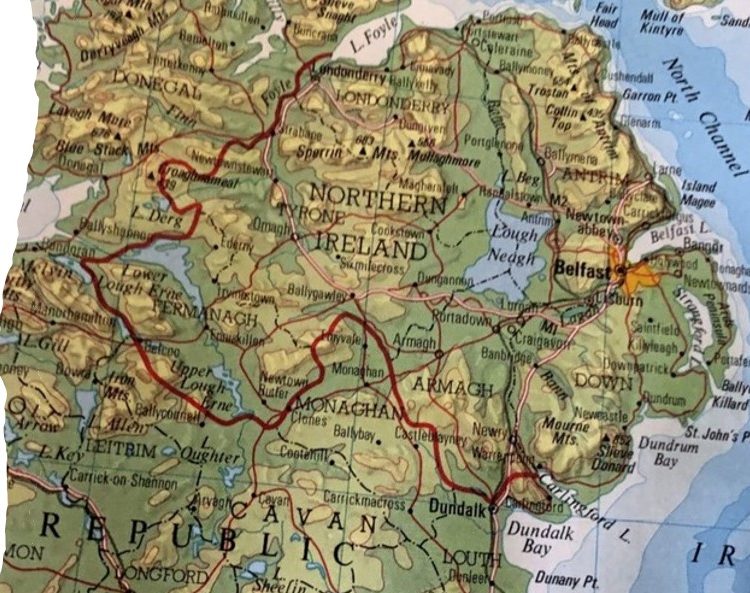
Shared Island Shared Opportunity: NESC Comprehensive Report
As part of the Government’s Shared Island Initiative the Department of the Taoiseach requested NESC to undertake research and to produce a comprehensive report on the Shared Island, to inform the development of the Shared Island Initiative as a whole of Government priority.
This report is the culmination of research on the Shared Island that NESC undertook over 2021. This involved more than 100 meetings with practitioners, policy makers, academics and experts from a diverse range of institutions across the whole island, detailed work in the North West including four focus groups, a public consultation on climate and biodiversity, plus a number of NESC Shared Island publications on the economy, regional development, good jobs, climate and biodiversity, poverty and mental health.
The report draws on all this material to make 3 overarching conclusions.
First, there is very significant support, in practice, for an all-island approach to key economic, social, environmental, and wellbeing challenges.
Second, climate change and biodiversity loss provide a clear and urgent platform for ambitious all-island action and collaboration.
Third, the factors which are shaping current and future collaboration are a shared agenda, resources, political certainty and support, legislative and regulatory coherence, and collaborative projects.
The report makes specific recommendations across five key areas in relation to the economy and investment, social policy, climate and biodiversity, wellbeing measurement and data co-ordination.