This research was undertaken as a review paper to inform wider NESC work on Energy. Through the lived experience of a group of householders in Ireland, the report explores how households access, use and generate energy and heat their homes currently, and how they perceive this may change as a result of the energy transition.
Research Area: Environment, Climate & Sustainability
-
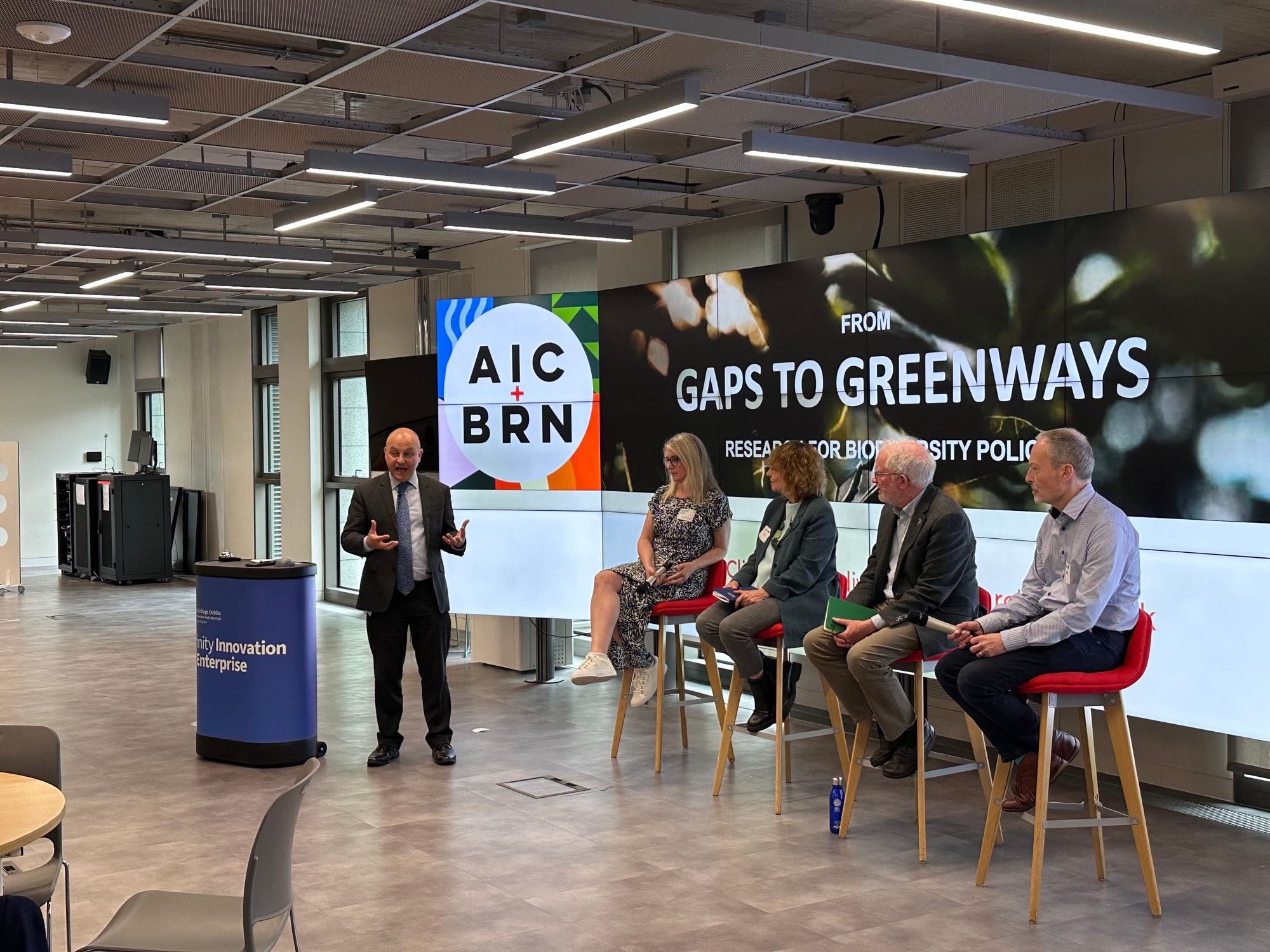
NESC at the Annual Event for the All Island Climate & Biodiversity Research Network
NESC Policy Analyst Dr Jeanne Moore recently participated in the All Island Climate & Biodiversity Research Network’s annual event, “From Gaps to Greenways: Research for Biodiversity Policy” on 29th May.
Following introductions from Professor Yvonne Buckley, TCD and Amy Taggart from AICBRN, Dr Moore took part in a panel discussion on biodiversity as well as policy and research gaps. Other panellists included Dr Gerry Clabby, DCEE, Dr Deirdre Lynn, NPWS, and Senator Malcolm Noonan.
Key areas highlighted by Dr Moore included the value of the all-island research network on climate and biodiversity, recognised in NESC’s shared island work in 2021. She outlined the research gaps outlined in NESC’s work on natural capital accounting on accessible data, spatial maps, and its potential value for policy decision making. Also highlighted was the importance of multi-stakeholder engagement, at national and local level, with communities in addition to building capacity and engagement across government between experts, government departments, and agencies on natural capital. Other panellists also highlighted the increasing importance of engagement and collaboration, connecting policy makers and researchers, and translating key findings for policy use. The potential for increased action was noted with the Nature Restoration Plan and following the second phase of the Land Use Review. The role of place-based approaches and the governance to support it was another theme discussed.
-
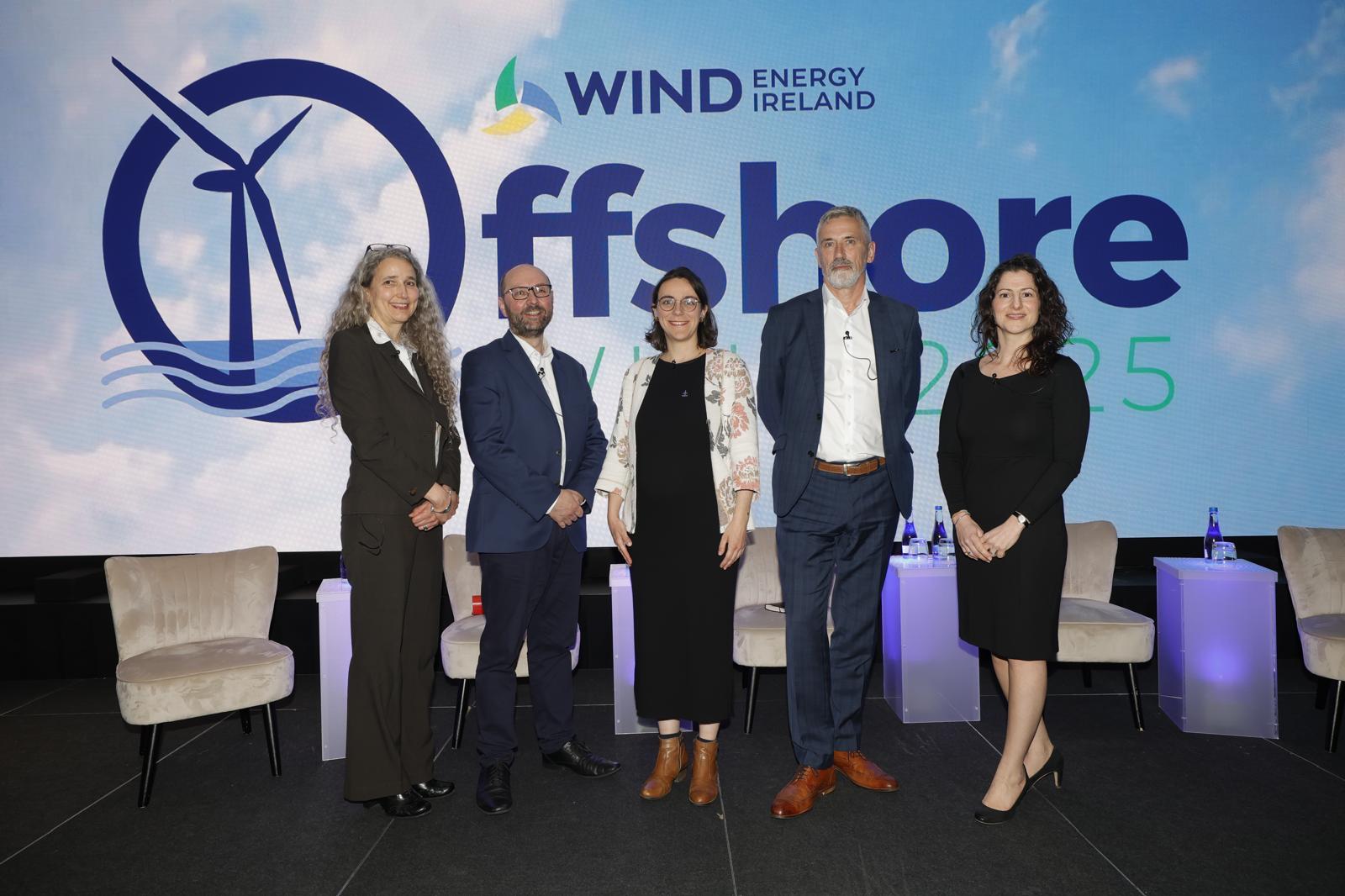
“More Viable Routes to Market for Offshore Wind Are Central to Ireland’s Transition” – NESC at Annual WEI Offshore Industry Conference
Kate Garth (RWE Renewables), Cathal FitzGerald (NESC), Pauline Fournols (WindEurope), Damien Clarke (DECC), and Wadia Fruergaard (Vestas)
“Ireland’s energy transition will only be realised when a market effectively connects consumers (who are willing and able to pay) and developers (who are able to supply) with viable projects” – this was a key message from NESC to the annual gathering of the offshore wind industry in Dublin recently.
Dr Cathal FitzGerald (Senior Analyst, NESC) was addressing Wind Energy Ireland’s Offshore Wind 2025 conference on the topic of ‘Designing a Competitive Future Offshore Wind Industry’.
“Ireland, like many countries, has placed much responsibility for the deployment of clean energy infrastructure, for meeting national targets – for the transition, in essence – on the market,” he said. “Progress rests on securing investment, on attractive routes to market, and the ability to predictably recover costs through auctions or power purchase agreements. There is an unavoidable tension for the price to be high enough to attract and predictably reward developers, but also be low enough to ensure affordability for the consumer and protect overall national competitiveness. This is an area for policy action now.”
NESC was setting the scene for the session, based on the Council’s recent report Ireland’s Future Power System and Economic Resilience. The conference then heard about the role of non-price criteria, EU legislation such as RED III and NZIA, and more details on Ireland’s forthcoming Tonn Nua auction.
“The EU, the State, the private finance sector, and industry must respond credibly to the finance requirements for the transition. The State must be the ‘system architect’ in the plan-led approach that works for industry and consumers,” Dr FitzGerald said. “The Government has responded to the Council’s analysis by establishing a new Climate Investment Clearing House and a joint Government Industry Forum on Offshore Renewable Energy. And the Council’s report provides an agenda for policy action,” he concluded.
-

Energy Transition as an Opportunity to Eliminate Energy Poverty
In achieving independence from fossil fuels by 2050, while enhancing well-being and leaving no one behind, there is a need to work towards the elimination of energy poverty in the transition.
This secretariat paper focuses on the implications for households at risk of energy poverty in Ireland and across the island of Ireland in the transition to a fossil free future.
-
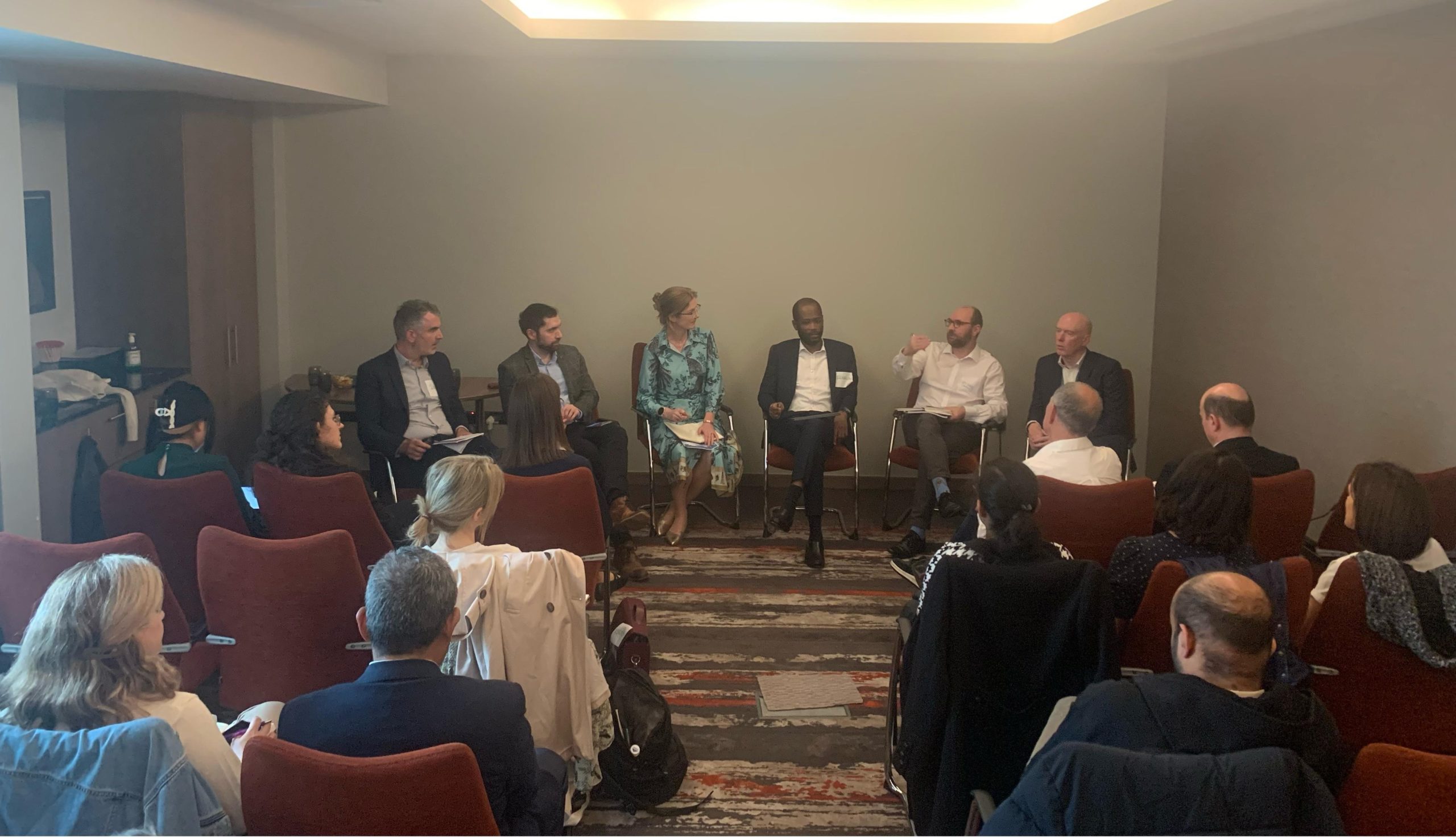
Academic Research Key to Clearing the “Fog” of Energy Transition
Energy Transition Policy Panel: Daire McCoy (Ofgem), Niall Farrell (ESRI), Lisa Ryan (Chair, UCD), Franklin Amuakwa-Mensah (EfD), Cathal FitzGerald (NESC), and Fergal McParland (DECC)
Researchers in higher education institutes can address the knowledge gaps identified by NESC in Ireland’s energy transition policy. This was a key message delivered by Dr Cathal FitzGerald, Senior Analyst, to a UCD workshop this week on ‘Economics of the Global Energy Transition: Policy-Relevant Research for Evidence-Based Policy’.
“The Council has found that much of Ireland’s policy action for transition in the power sector is headed into fog. Visibility and certainty are low, and key actors are not on the same page from a strategic standpoint,” Dr FitzGerald said, “but researchers in our higher education institutes can help guide the way.”
In its recent report Ireland’s Future Power System and Economic Resilience, NESC stated that to move from the status quo to near-term targets and towards domestic net zero, the State must have the capacity to harness frontline knowledge as well as evidence from the research community. The State must live with uncertainty yet also act now to provide a more clearly defined and articulated agreed strategic path for the planned energy transition. The Council has identified ten key research gaps to begin with in this regard (see below).
Addressing the workshop, Dr FitzGerald said that in its response to the NESC report, the Government had announced new institutional arrangements to accelerate progress on Ireland’s energy transition, and the academic community must involve itself in and inform these developments.
“Our report says that to mitigate uncertainty, new institutional arrangements should identify and name outstanding evidence and data gaps as a guide to Ireland’s research community, including in the higher-education sector, to maximise their contribution to policymaking,” he said. “The Council has stated that it is important to recognise the vast scope of research work already underway, and the crucial contribution the academic and other research communities are making today. They must be equipped, ready, and able to do more,” Dr FitzGerald concluded.
This workshop was arranged by the UCD School of Economics and brought together academics and practitioners in energy economics and policy to explore pressing topics related to the global energy transition. With contributions spanning both the Global North and South, the workshop aimed to bridge the gap between research and real-world policymaking, foster knowledge exchange, and create space for future collaboration.
Read the full Council report here.
The Council identified key research gaps. To begin with, action is needed on the following:
- A detailed model for capacity expansion for Ireland. The model should set out the logical, evidence-based staging posts and other parameters of a successful transition; the progress to be completed by those staging posts; and the roles, responsibilities and expected outcomes from all those with responsibility for delivering the various elements of the shared plan. Rather than starting with an end-goal target for capacity (e.g. 37 GW of offshore wind), the model should detail the path, from existing renewable power generation capacity to an agreed midpoint on the way to domestic net zero, and if viable and valuable, on to surplus production. Adjustments can be expected along the way.
- Assessment of the specific energy capacity required to achieve domestic net zero, and when this is to be achieved, whereby Ireland’s power demand is met via renewable sources, to the maximum that is feasible, and where greenhouse-gas emissions are balanced or exceeded by the removal of greenhouse gases.
- Detailed consideration of the optimal use of any surplus energy, including (but not limited to) creating and serving new industrial opportunities in advanced manufacturing and in traditional sectors which require significant quantities of power, and the potential export of energy.
- A single, internally consistent and coherent forecast of power generation, demand, interconnection, reliability and capacity adequacy.
- A detailed, evidence-based profile of expected energy supply reliability across the transition timeline.
- Examination of whether Loss of Load Expectation (LOLE) remains an appropriate metric for capacity adequacy in Ireland. Informed by recent work in the UK, further develop the theoretical framework for a new metric (or combination of metrics) of reliability.
- Widely accepted, standardised technology cost comparison metrics and data to better inform policy considerations and action.
- Irish data comparing the levelised cost of renewable power versus conventional energy sources, and a new measure to capture the full system costs of delivering power to consumers, the cost of ensuring the reliability of intermittent renewable sources, energy storage and backup costs, and other important costs not captured by the Levelised Cost of Energy (LCOE) measure.
- A single source of verified data on planning and regulatory process efficiency, accepted by industry and authorities, to inform policymaking.
- Research which provides clarity and certainty on the path of expected full system costs and related competitiveness impacts over the short, medium and long term.
-
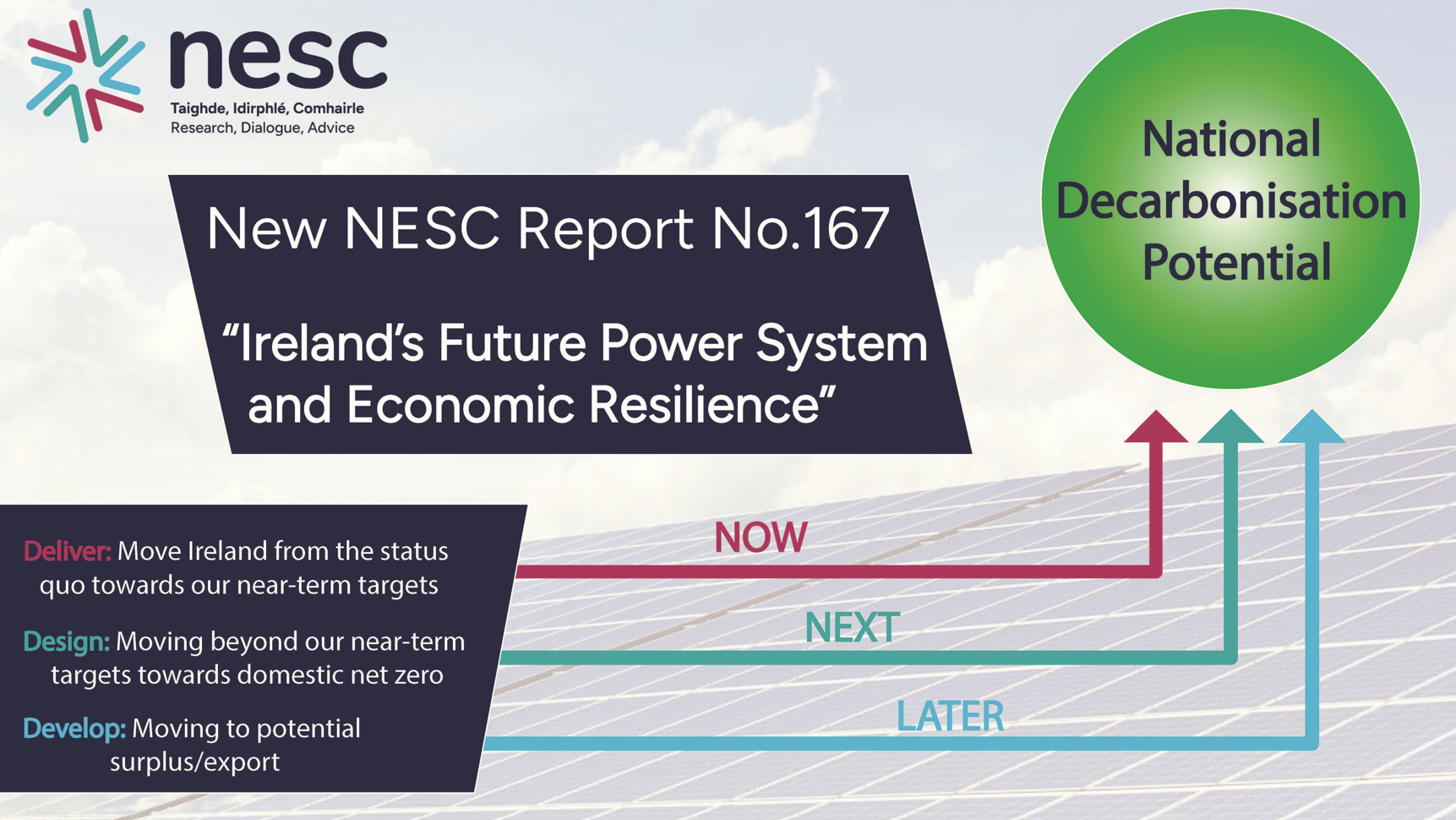
NESC report shows Action is Needed Now to “Clear the Fog” and Progress Ireland’s Energy Transition
- Much of Ireland’s policy for transition in the power sector is headed ‘into fog’.
- Key actors are not ‘on the same page’ from a strategic standpoint.
- Actions must be taken now, next, and later to reinforce Ireland’s energy transition and economic resilience, and to help us reach our national decarbonisation potential.
18 April 2025, Dublin, Ireland: A new research report published by the National Economic and Social Council (NESC) examines four key aspects of Ireland’s energy transition which are important for national economic resilience: enterprise opportunities, the reliability of power supply, the cost of energy, and the export of energy. This report presents a suite of actions to work through immediately to progress Ireland’s power sector transition.
“Ireland aims to transform our power system over the next 25 years by reducing fossil fuel use and ramping up the use of solar and wind energy. This is key to addressing climate change,” said Dr Cathal FitzGerald, Senior Analyst at NESC. “However, NESC’s research reveals uncertainty about the impact on our economic resilience in terms of energy reliability, price, jobs, and export. These in turn highlight broader issues to be resolved and a strong imperative for action,” he stated.
Based on in-depth research and extensive consultations with key actors, the Council identifies four primary risks to policymaking and to the transition narrative.
- First, the Council finds a complex landscape of assessments of enterprise opportunities. There is no single, comprehensive estimate available to policymakers of the sales, exports, and jobs etc. that can be expected from delivering transition targets.
- Second, NESC reveals a lack of clarity and certainty about the future reliability of energy supply. Reliability may worsen over periods of the transition, if not addressed, and there is also no clear visibility of the power system’s reliability beyond 2032.
- Third, the Council finds that the transition may result in higher, not lower, electricity prices, challenging national competitiveness and the transition narrative. Clarity is needed regarding the total system cost of transition in the power sector and the distribution of those costs.
- Fourth, NESC finds that key questions about renewable energy capacity requirements, the rationale for surplus power generation, its optimal use, price competitiveness, and the method of energy export remain unanswered.
Dr FitzGerald added: “It is important that these findings do not lead to paralysis. Our work finds that much of Ireland’s policy action for transition in the power sector is headed into fog. Visibility and certainty are low, and key actors are not on the same page from a strategic standpoint. But the energy transition is of paramount importance and must be progressed despite all the complexities involved. The cost of inaction would be enormous and devastating.
“Ireland’s decarbonisation potential includes the ability to meet all, or almost all, of our power demand from renewable energy sources – to reach domestic net zero in other words. There is also the prospect of producing surplus clean energy to power enterprise and spur new opportunities, and even the possibility of exporting surplus clean energy, if proven practical and viable.
“The Council’s report sets out actions to be taken now, next, and later to help us realise that potential. Right now, we need to improve the conditions for clean energy infrastructure delivery – the planning and consents, the grid, skills, finance, and ports, shipping, and supply chains. A new institutional framework can help make this happen and provide strategic direction.
“Next, we need to fill in the knowledge gaps revealed in the Council’s research. Ireland also needs to demonstrate sustainable demand for renewable power that matches national targets, and to ensure the expected jobs and opportunities arise here.
“Later, to move beyond domestic net zero, action will be needed to produce competitively priced energy for international markets, to develop a viable export method, and to successfully manage security concerns.”
On the publication of the report, Dr Larry O’Connell, Director of NESC, added that: “The Council believes there is an urgent need to address the strategic gaps identified in this report in a way that reinforces both the energy transition and economic resilience, while moving Ireland forward. NESC’s recommended actions represent an agenda for the policy system to work through immediately to make transition in Ireland’s power sector more likely, and more likely to be successful.”
To read the report in full please click here.
ENDS
For further information, contact:
Marie Lynch, Carr Communications,
e: marie@carrcommunications.ie | m: 087 973 0522
-

Ireland’s Future Power System and Economic Resilience
The transition to a decarbonised power system is an essential element of Ireland’s action to address the climate and biodiversity emergencies. Every step to assist the delivery of that transition must be taken. In addition to its legally binding carbon budgets, Ireland has committed to reducing harmful emissions by 2030, and to becoming a climate-neutral economy by no later than 2050. Central to delivering on these commitments are ambitious national targets for the power sector.
According to multiple national policies and statements, the energy transition will not only help address urgent environmental concerns but will also deliver substantial economic co-benefits by creating enterprise opportunities, by improving reliability of energy supply, by lowering energy costs, and by enabling Ireland to become a net energy exporter.
The Council has explored in more detail the link between the delivery of targets for the power sector and the realisation of these economic co-benefits. NESC undertook a broad literature and policy review, international engagement, and an extensive consultation process with over 40 key actors in the power sector.
This Council Report is further supplemented by a Secretariat Paper, Ireland’s Future Power System and Economic Resilience – Research Background Paper.
-
Ireland’s Future Power System and Economic Resilience: Research Background Paper
This Secretariat paper provides information on the research underpinning the NESC Council Report No.167 Ireland’s Future Power System and Economic Resilience.
It sets out additional information on the context of the research (chapter 1), provides detail of the research question, definitions, and approach (chapter 2), and recounts the report’s conclusions (chapter 3).
This paper should be read alongside that Council report, which is available here.
-
Future of the Gas Sector in Ireland
Energy is a crucial driver of economic growth and societal prosperity. Natural gas is one of Ireland’s primary fuels for energy generation, with nearly 60 TWh of natural gas being delivered via pipelines to over 720,000 users in 2023. However, 80% of the natural gas used in Ireland is imported directly from the United Kingdom (UK), which poses energy security risks due to limited source diversity. The gas sector plays a substantial role in electrical power generation and heating in residential and non-residential sectors. The national climate objectives will significantly impact the gas sector, as it generates roughly 20% of Ireland’s annual greenhouse gas emissions (GHG) and requires a shift to Net-Zero Emissions (NZE) while at the same time maintaining affordable energy for consumers. After reviewing published government strategies, industry reports and research papers, the climate actions and renewable gas projections were analysed to investigate the future of the gas sector. The costs of biomethane and hydrogen deployment and the challenges associated with the gas sector transition are discussed, and key conclusions are drawn.
This research was undertaken as a review paper to inform wider NESC work on Energy. It was published simultaneously with Ireland’s Future Power System and Economic Resilience (NESC Council Report No.167), which you can read by clicking here.
-
A Gravity Model Specification for Irish Green Energy Goods and Services
As Ireland moves away from fossil fuels and toward more renewable energy sources, there is an opportunity to maximise the economic benefits arising from this transition, including job creation, and exporting goods and services as well as renewable electricity. The purpose of this paper is to explore whether and how a gravity model might help Ireland to seize green export opportunities.
This research was undertaken during the 2024 NESC internship as part of the Master of Public Policy Programme, University College Dublin. It was published simultaneously with Ireland’s Future Power System and Economic Resilience (NESC Council Report No.167), which you can read by clicking here.